We are delighted to announce the themes and participants in our 2026 ASLE Spotlight series.
Each of the three ASLE Spotlight episodes will feature moderated conversations with ASLE members who have produced new critical and creative work in the environmental humanities. Episodes follow a theme, and highlight publicly engaged scholarship. They are recorded for later viewing, and posted to ASLE Spotlight and to our Spotlight Channel on YouTube.
Read about and register for each episode below.
EPISODE 1: Decolonizing Environments
January 23, 2026
1-2pm EST
Co-hosts: Lisa Fink, Sarah Wald
FEATURED GUESTS/WORKS:
David J. Vazquez, Decolonial Environmentalisms: Climate Justice and Speculative Futurity in Latinx Cultural Production
Decolonial Environmentalisms argues that the mainstream environmental movement is implicated in racial capitalism, not least through its ignorance of environmental justice as it pertains to Latinx people. Through close readings of eco-minded novels, films, visual art, and short stories by Chicanx, Puerto Rican, Dominican, Cuban American, Peruvian, and Central American culture makers, the book surfaces diverse Latinx visions for an equitable and sustainable humanity.
In the creations of Helena María Viramontes, Ester Hernández, Salvador Plascencia, the printmaking collective Dominican York Proyecto GRAFICA, and others, Decolonial Environmentalisms locates a bracing critique of racist elisions and assumptions in hegemonic environmentalist thought. At the same time, the book shows that the roles of Latinx people in the exploitation of the US West and the ruin of Indigenous communities are ripe for self-examination, in hopes of sparking reform. Indeed, Decolonial Environmentalisms is a work of guarded optimism, finding glimmers of possibility even in dystopic science fiction. The overlooked experiences of Latinx people, Decolonial Environmentalisms suggests, can inspire environmental movements capable of transformative advocacy.
David J. Vazquez is Professor of Critical Race, Gender, and Culture Studies at American University in Washington, DC.
Teresa Dzieglewicz, Something Small of How to See a River
This poetry book chronicles my time co-running a school at the Water Protector Camp at Standing Rock. It’s about land/water, police violence, whiteness, and the small labors it takes to build a community/movement. Tyehimba Jess (Pulitzer winner) described it as “honest, bracing news for the weary but unwavered.”
Teresa Dzieglewicz is a Pushcart-Prize winning poet, educator, and activist. Her first poetry book is forthcoming in October and her first children’s book in 2026.
Julianne Warren, “Alaska” Is Not a Blank Space: Unsettling Aldo Leopold’s Odyssey
“Alaska” Is Not a Blank Space: Unsettling Aldo Leopold’s Odyssey challenges canonized conservation narratives of Aldo Leopold, explaining how they entrench racist colonialism. Regarding “Alaska”, it shows ways to engender just, generative land-relations and support Indigenous Peoples’ sovereignty and environmental coalition-building.
Julianne Warren (she/her, settler) is a writer, educator, and activist with a PhD in wildlife ecology and an MFA in creative writing.
Allison Carruth, Novel Ecologies: Nature Remade and the Illusions of Tech
Novel Ecologies: Nature Remade and the Illusions of Tech (2025) investigates a distinctly California paradigm shaped by the tech industry—what Allison Carruth terms Nature Remade. Through three case studies—synthetic wildlife, the digital cloud and space colonization—the book challenges the conviction that climate change and other environmental crises must be met with planetary-scale technological intervention. Against the world-building gambits of Google, Open AI, SpaceX and a host of start-ups, Carruth marshals the work of writers and artists who imagine provisionally hopeful futures while refusing to forget histories of power and exploitation that have made the world what it is.
Allison Carruth is Professor of American studies and Environmental Studies at Princeton University, and founding director of Blue Lab.
EPISODE 2: Embodied Approaches
February 6, 2026
1-2pm EST
Co-hosts: TBA
FEATURED GUESTS/WORKS:
Madison Jones, North Woods Project
The North Woods Project (NWP) blends art and science through an immersive multimedia “classroom in the forest” experience for the North Woods—a ~300-acre parcel of unmanaged forests and wetlands on the north part of URI’s campus. Through an open-access digital resource and ongoing research and teaching project, NWP celebrates the North Woods through social, ecological, and creative perspectives.
Madison Jones is an associate professor of science communication, jointly appointed in the departments of Professional & Public Writing and Natural Resources Science at the University of Rhode Island.
Rasheena Fountain, Dropped Down Blues
Dropped Down Blues is a blue speculative fiction and poetry audio-visual project set in Pipers Creek, a 1.4-mile stream located in Carkeek Park in Seattle. It was on view in the “How to Carry Water” exhibit at The Patricia Valian Reser Center for the Creative Arts (PRAx) in 2024.
The project includes nature field recordings, speculative fiction, poetry, and guitar riffs based on fieldnotes, observations, research, and guitar performances during the November 2022 visits to the creek during salmon run. In the summer, Fountain spent time in the studio with a Jack Straw engineer to hone the audio (poetry, speculative fiction, field recordings, and guitar performance) for the project as part of the Jack Straw Artist Support Program.
Rasheena Fountain earned a BA in Creative Writing from the University of Illinois at Urbana-Champaign and an MA.Ed. in Urban Environmental Education from Antioch University Seattle in partnership with IslandWood. Fountain has an MFA in Creative Writing from the University of Washington Seattle, where she is currently a Ph.D. candidate working on a dissertation focused on blues performance and environmental justice and a climate blues guitar and poetry album.
Radhika Subramaniam, Footprint: Four Itineraries
The book probes the long history of the footprint’s manifestation in the human imagination—testifying to colonialism, imperialism, and suppression but also to desire, persistence, mobility, and of lightness. Exploring why and what it means for our future, it asks if we can yet tread lightly on our world.
Radhika Subramaniam is Associate Professor of Visual Culture at The New School, New York. She explores crises and surprises in cities, walking, art and human-nonhuman relationships.
Maya Jewell Zeller, Raised by Ferns
Raised by Ferns follows a feral girl born in a gas station, and a middle class educated woman; two of many selves the author inhabits as she navigates academia, motherhood, marriage, and American class systems—finding herself over and over again most at home in wild spaces.
Maya Jewell Zeller is the author of several books, including The Wonder of Mushrooms. She teaches writing at Central Washington University and Western Colorado University MFA.
EPISODE 3: Multispecies Connections
March 13, 2026
1-2pm EST
Co-hosts: TBA
FEATURED GUESTS/WORKS:
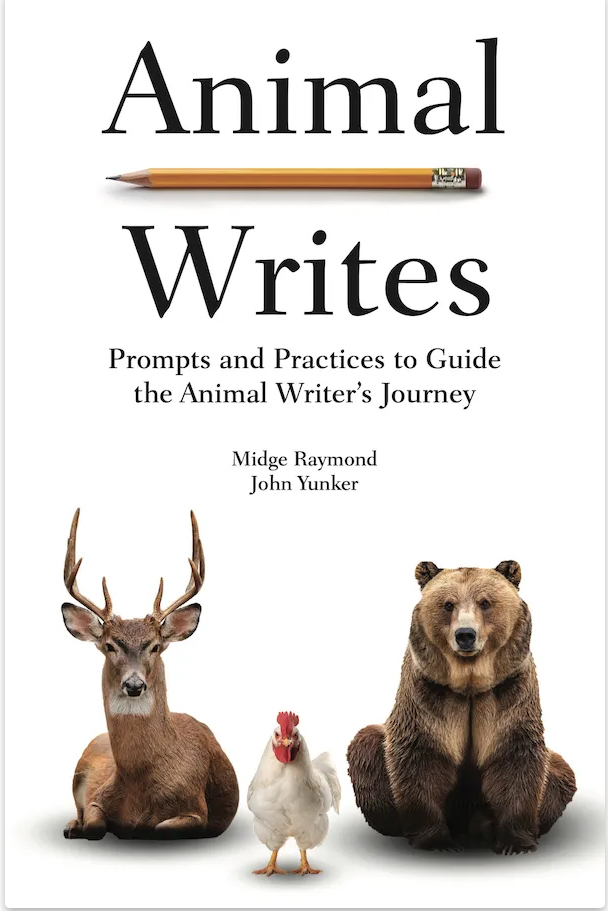
John Yunker and Midge Raymond, Animal Writes: Prompts and Practices to Guide the Animal Writer’s Journey
Writing for animals is a unique endeavor; writers have to think not only about the animals they’re portraying in their work but about audiences who may not be familiar with certain species or the topics of animal rights. In Animal Writes, you’ll learn tips for how to portray animals empathically and authentically, as well as how to approach publishing and your readers. From language to craft to exploring your individual writer’s journey, this book will provide the inspiration and tools you need to portray animals genuinely and compassionately in your work.
John Yunker and Midge Raymond are co-authors of the work and co-founders of Ashland Creek Press, a vegan-owned small press devoted to environmental and animal literature.
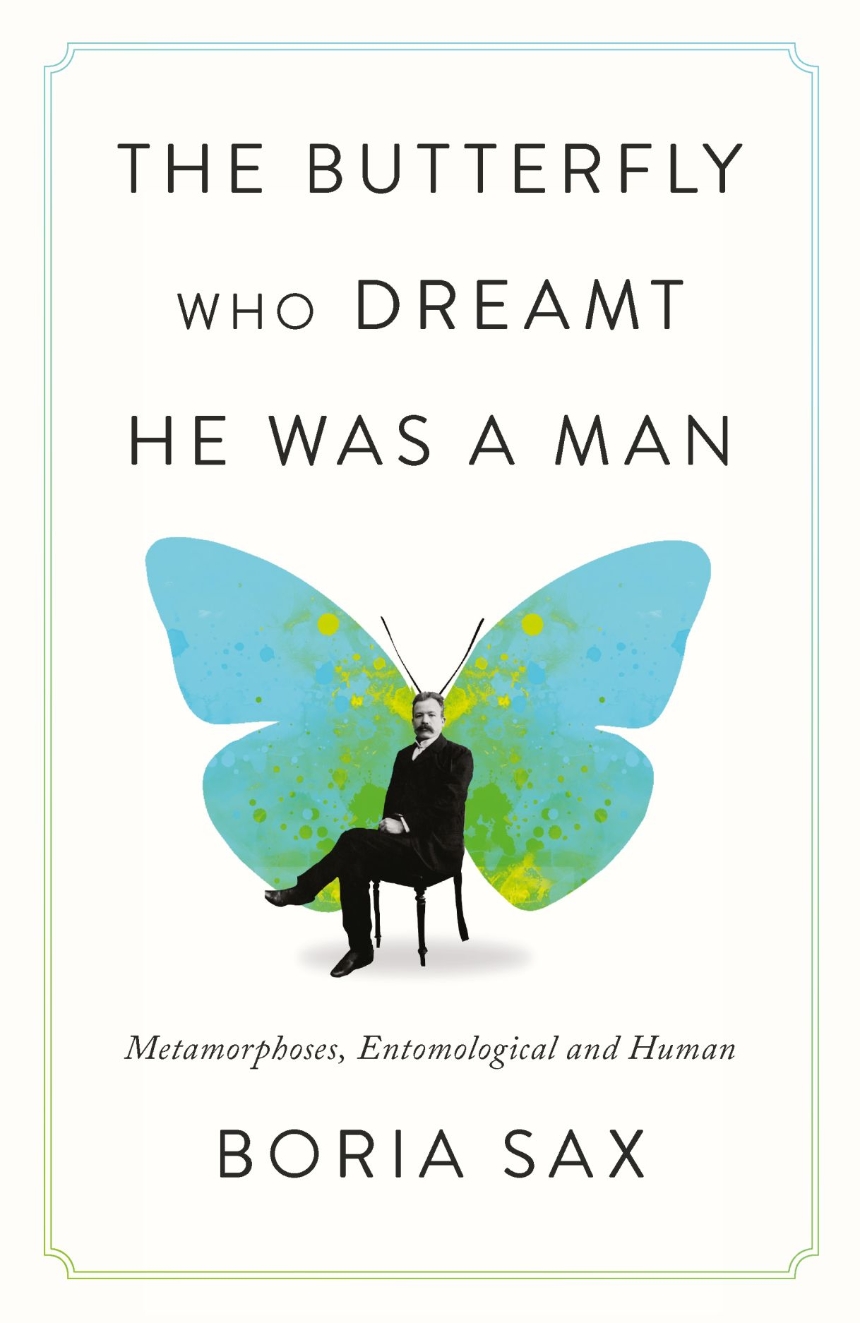
Boria Sax, The Butterfly Who Dreamt Himself a Man: Metamorphoses, Entomological and Human
From ancient fables to modern science, insects and their metamorphoses have inspired human understanding of life’s transitions such as birth, coming of age, marriage, and death. This book begins with Zhuang Zhou’s butterfly dream, moves on to tales of shape-shifting, and discusses Dürer, Merian, Swammerdam, Kafka, Dickinson, and many others.
Boria Sax teaches at Sing Sing and the graduate English program of Mercy University. He is author of 20 books, which have been widely translated.
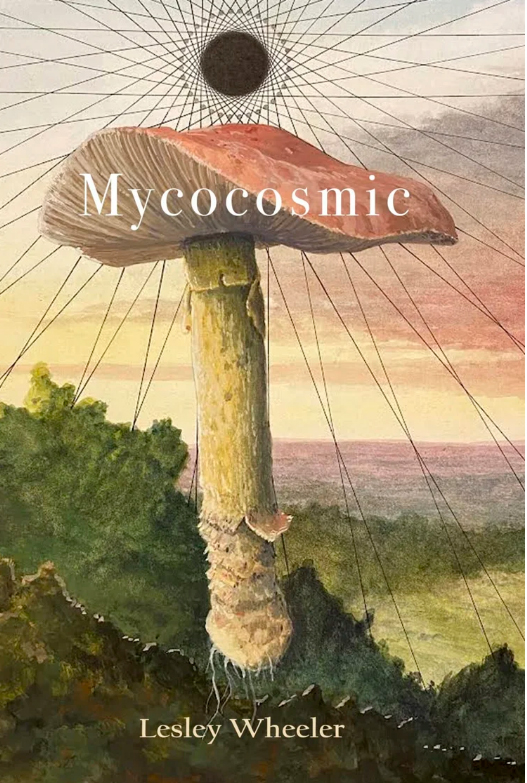
Lesley Wheeler, Mycocosmic
In Mycocosmic, Lesley Wheeler’s latest poetry collection, incantatory poems summon transformation after the losses of midlife, including her mother’s death. Beneath them runs a book-length essay in verse inspired by mycelia, the fungal networks thriving beneath us, exploring how the processes of grief nourish new life. Wheeler invents a fungal poetics to metabolize secrets, grief, and anger so that life can begin anew.
Lesley Wheeler’s sixth poetry collection is Mycocosmic. Her work appears in Orion, Poetry, Poets & Writers, and Ecotone, and she is Poetry Editor of Shenandoah.
Lay Sion Ng, Hemingway, Ecology and Culture: Re-reading Hemingway in the Anthropocene
Ng’s research uncovers the ecological dimensions hidden within seemingly human-focused American literature. Take Hemingway—not exactly who you’d expect to teach interspecies relationships or environmental crisis, right? Yet Hemingway, Ecology and Culture reveals how his anthropocentric narratives pulse with “ecological forces”—human and more-than-human connections previous scholarship overlooked.
Lay Sion Ng is an Assistant Professor of American Literature at the English Literature Department at Sophia University, Japan. I have a website named Issues Under Tissues.