

ASLE’s Scholar of the Month for April 2026 is Chiara Xausa
Chiara Xausa is a Marie Skłodowska-Curie Global Postdoctoral Fellow and Principal Investigator of the SHIFT-GEN project, jointly hosted by the University of Idaho (US), Ghent University (Belgium), and the University of Bologna (Italy). The project explores young adult climate fiction through econarratology and affective and empirical ecocriticism, with a focus on how narratives shape emotional and political responses to the climate crisis. More broadly, her work engages feminist environmental humanities, queer ecologies, postcolonial studies, and utopian studies. She received her PhD from the University of Bologna in 2022 and was a Visiting Fellow at the Research Centre for Environmental Humanities at Bath Spa University in 2020. She later held positions as an adjunct professor and postdoctoral fellow in Anglophone Literature at the University of Bologna (2022–2024). Her first monograph, Intersectional Futures in Climate Fiction: Undoing the Anthropocene Master Narrative (Peter Lang, 2025; Ralahine Utopian Studies series), offers one of the first sustained analyses of climate fiction through an intersectional ecocritical framework. Extending this work, she co-edited (with Giulia Fabbri, Sapienza University of Rome) the special issue “Feminist and Intersectional Ecologies in Transmedia Environmental Humanities” (de genere: Journal of Literary, Postcolonial, and Gender Studies, 2025). She is currently working on two book projects: Eco-Anxiety and the Politics of Futurity in Contemporary Fiction and Queer Ecological Forms in Contemporary Fiction (the latter co-authored with Gabriele D’Amato, Ghent University).
How did you become interested in studying ecocriticism and/or the environmental humanities?
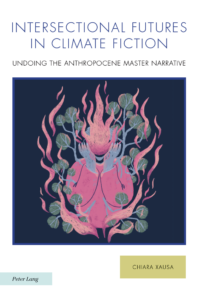 My interest in ecocriticism grew out of my earlier training in gender studies. In 2018, I was completing a Research Master’s in Gender Studies at Utrecht University, where I was first exposed to feminist, queer, and decolonial theory, and, crucially, to critical posthumanism. Encountering the work of Rosi Braidotti—whose presence at Utrecht continues to shape its intellectual environment—was particularly transformative: it opened up a way of thinking about subjectivity and relationality beyond anthropocentric frameworks. This was a turning point for me. Coming from an Italian academic context where ecocriticism was only beginning to gain visibility—and is still, in many ways, struggling to establish itself—I had not previously encountered the environmental humanities as a coherent field. Discovering these approaches felt like finding a space that brought together my interests in postcolonial literatures and gender studies, while also pushing me to rethink them in explicitly ecological terms. This led me to develop a PhD project that explored how feminist and postcolonial thought engages with environmental crisis in contemporary literature. During my doctoral research, I had the opportunity to be supervised by Raffaella Baccolini, a leading scholar in utopian studies, whose work significantly shaped my approach to the novels I analyzed. That work developed into my first monograph, which examines how contemporary climate fiction challenges dominant narratives of the Anthropocene by foregrounding the entanglement of ecological crisis with histories of colonialism, race, and gender. Bringing together ecofeminism, intersectionality, and decolonial thought, the book focuses on authors such as N. K. Jemisin, Nnedi Okorafor, and Alexis Wright, and reflects my broader commitment to developing intersectional approaches within ecocriticism. More broadly, what continues to motivate my research is the conviction that the environmental humanities provide a crucial space for rethinking how we imagine more just and livable futures.
Who is your favorite environmental artist, writer, or filmmaker? Or what is your favorite environmental text? Why?
Rather than identifying a single favorite text, I find myself returning to a range of Afrofuturist and Africanfuturist works—across literature, film, and visual art—that have shaped how I think about climate justice and imagination. These works reframe ecological crisis from perspectives that are often sidelined and treat futurity as a site of struggle rather than resolution. One work I often return to is the short film Pumzi by Wanuri Kahiu. Set in a post-water crisis East Africa, the film imagines a society in which resources and imagination are tightly controlled: dreaming of alternative futures is monitored and suppressed. What stays with me is how the film locates resistance in the capacity to imagine otherwise. A vision of a living, regenerative world—triggered by something as simple as the smell of soil—becomes a refusal of the present and opens onto a different ecological future. I also return frequently to the work of Wangechi Mutu. Her film installation The End of Eating Everything engages with the entanglement of consumption, environmental destruction, and the exploitation of racialized and gendered bodies, making visible the violence that sustains extractive systems. Writers such as Nnedi Okorafor, N. K. Jemisin, and Rivers Solomon have also been central to my thinking. Their work reimagines climate crisis through Africanfuturist and Afrofuturist lenses, engaging questions of multispecies relationality, environmental justice, and the afterlives of colonial violence, while often staging forms of rupture that allow us to think beyond extractivism and human exceptionalism. In this constellation, the work of Octavia E. Butler remains foundational: her writing anticipates many of the questions that are now central to the environmental humanities, especially the role of speculative imagination in articulating collective responses to crises. What draws me to these works is both a shared aesthetic and their insistence on imagining futures from positions that are historically marginalized, without smoothing over the conflicts and inequalities that shape the present.
What are you currently working on?
I am currently working on two book projects that develop different strands of my research in the environmental humanities, with a focus on the affective and narrative dimensions of the climate crisis. The first project, Eco-Anxiety and the Politics of Futurity in Contemporary Fiction, is the main output of my Marie Skłodowska-Curie project SHIFT-GEN and is currently under review with Bloomsbury for the Environmental Cultures series. The book approaches eco-anxiety—understood as part of a broader spectrum of climate distress—as a key category for analyzing contemporary fiction. Rather than treating it as an individual or purely psychological condition, it examines how literary texts mediate eco-anxiety as a socially and politically structured affect, shaped by narrative form. Bringing affective ecocriticism into dialogue with econarratology, the book develops a framework for understanding how narrative structures organize climate-related emotions and their political implications. It traces how contemporary fiction reconfigures eco-anxiety across a set of tensions: between individual experience and collective responsibility, despair and hope, reproduction and refusal, and present crises and future imaginaries. Across a corpus that includes intergenerational, young adult, queer, feminist, and postcolonial texts, the project shows how climate fiction renders eco-anxiety as a shared yet unevenly distributed condition, shaped by intergenerational conflict, environmental injustice, and unequal access to futurity. Alongside this, I am working on a second book, Queer Ecological Forms in Contemporary Fiction, with Gabriele D’Amato (Ghent University). This project shifts the study of queer ecologies toward literary form, looking at how narrative devices and aesthetic structures generate queer ecological possibilities. Bringing queer and trans ecologies into dialogue with narrative theory and New Formalism, it examines how contemporary fiction reworks dominant plots of kinship, futurity, and survival in the context of intertwined social and environmental crises. Together, these projects reflect my broader research trajectory, which focuses on how literary form mediates the relationship between affect, politics, and ecological crisis. In parallel, I am also developing a line of research on reproductive utopianism in contemporary fiction, in collaboration with Raffaella Baccolini and Arianna Preite (University of Bologna). This work examines how literary texts engage with reproductive politics and emerging technologies in relation to broader social and ecological transformations. Bringing feminist theory into dialogue with utopian studies, it explores how contemporary fiction reimagines reproduction and care under conditions shaped by climate crisis, inequality, and technoscientific change, with particular attention to the intersections between reproductive and environmental justice.
What is something you are reading right now (environmental humanities-related or otherwise) that inspires you, either personally or professionally?
Something I have recently gone back to is Animal Resistance in the Global Capitalist Era (2020) by Sarat Colling, whose passing was a great loss for the field of critical animal studies. Revisiting her work has been both intellectually and personally meaningful, because of the urgency of its political and ethical stakes. What I find particularly compelling in Colling’s work is her insistence on shifting the terms through which we understand nonhuman life. Rather than focusing exclusively on suffering—however necessary that focus may be—she foregrounds nonhuman animals as subjects capable of resistance. In doing so, she challenges a long-standing tendency, in both public discourse and academic scholarship, to frame animals primarily as passive victims of violence. In Animal Resistance in the Global Capitalist Era, Colling examines accounts of animals escaping from slaughterhouses and industrial farms, reading these moments not as accidents or disruptions, but as embodied acts of refusal. Her analysis offers a reconceptualization of agency that does not depend on language, human-defined intentionality, or formal political recognition, but instead asks us to rethink what counts as action in the first place. This shift—from suffering to resistance—has been particularly important for my own work. In a recent project, I draw on Colling’s insights to rethink how contemporary fiction can make nonhuman resistance legible, moving away from frameworks based on comparison between human and nonhuman suffering and toward what I describe as forms of multispecies coalition. Rather than asking whether different forms of oppression are equivalent, I am interested in how narratives bring together differently positioned human and nonhuman subjects within shared, though uneven, structures of domination and struggle. What continues to matter to me in Colling’s work is this capacity to reframe the field. By insisting that nonhuman resistance should be taken seriously, she expands the scope of critical animal studies and offers conceptual tools that resonate across the environmental humanities, narratology, and intersectional approaches to ecological crisis.
Is there a scholar in the field who inspires you? Why?
My work has been shaped by a constellation of scholars across the environmental humanities, making it difficult to single out a one figure. Rather than identifying one name, I find it more meaningful to think in terms of intellectual genealogies and ongoing conversations that continue to inform my research. A foundational point of reference for me is the tradition of ecofeminism(s), feminist environmental humanities, and feminist new materialisms, particularly the work of scholars such as Carolyn Merchant, Val Plumwood, Carol J. Adams, and Stacy Alaimo, to mention only a few particularly representative voices among many others that have shaped my thinking. I have also been deeply influenced by Shelley Streeby’s Imagining the Future of Climate Change: World-Making through Science Fiction and Activism, which foregrounds the central role of Indigenous and people of colour futurisms in imagining climate justice. Her engagement with the concept of “visionary fiction” shows how speculative writing can contribute to decolonizing the imagination and opening up alternative ecological futures. More recently, my work on queer ecologies has led me to engage extensively with Nicole Seymour, whose scholarship in the environmental humanities and queer, trans, and sexuality studies continues to be a source of inspiration. In my current research, I have increasingly turned toward affective ecocriticism and econarratology, fields shaped by scholars such as Marco Caracciolo, Heather Houser, Erin James, Jennifer Ladino, and Alexa Weik von Mossner, among others. Their work has been instrumental in shaping how I think about the relationship between narrative, affect, and ecological crisis. I have also had the opportunity to engage with some of these scholars more directly through research stays at Ghent University and the University of Idaho as part of my Marie Skłodowska-Curie project, for which I am deeply grateful.


