

By Gianfranco Selgas. Iberoamericana Vervuert, 2025 (Open Access).
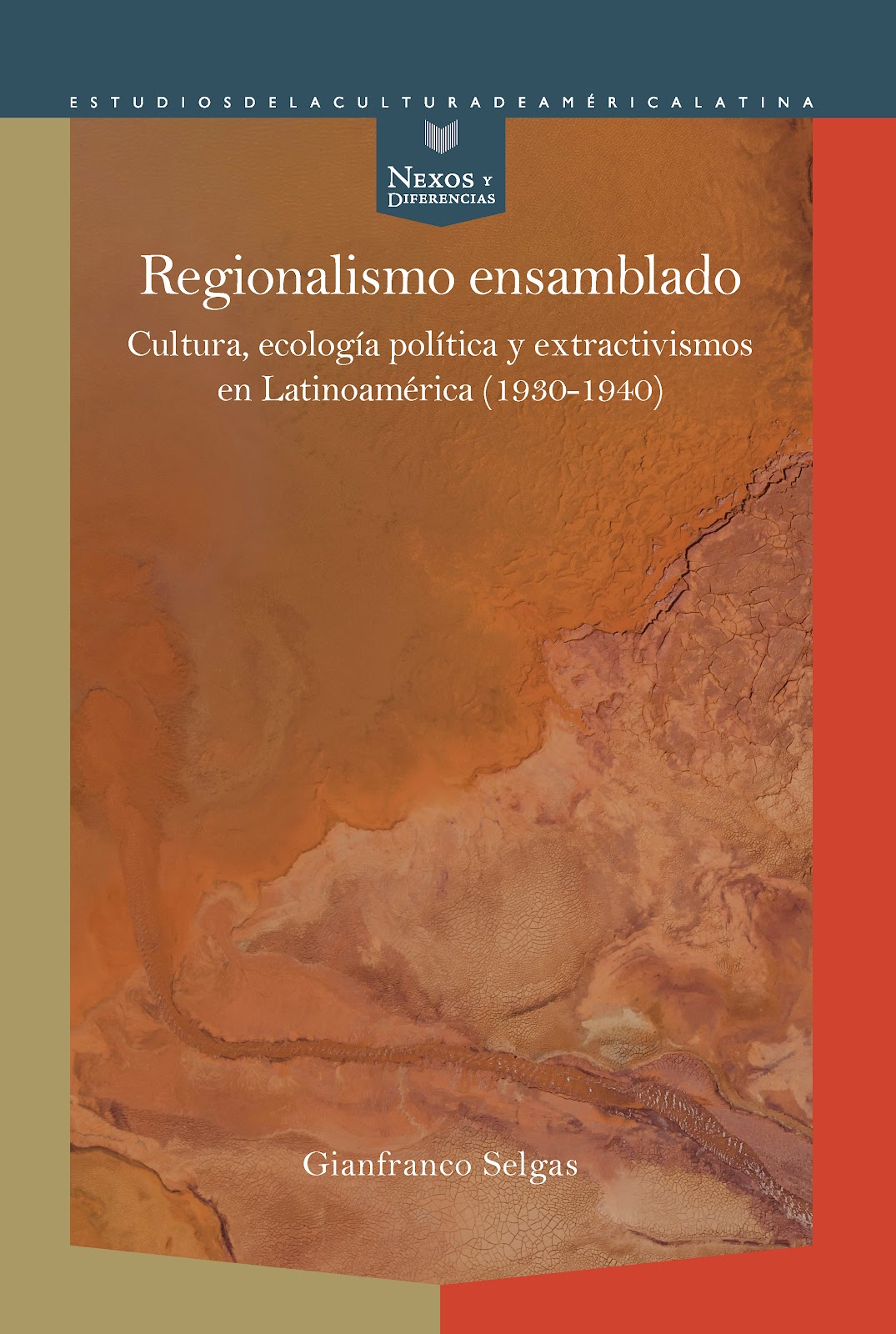 Regionalismo ensamblado proposes a new conceptualization of Latin American cultural regionalism as a form of political ecology. The book presents the idea of region and regionalism as an assemblage of geographic spaces, social practices, and materialities, examined through the literary and discursive production of the 1930s and 1940s as an early form of socio-ecological knowledge.
The book provides a framework for analyzing the works of Enrique Bernardo Núñez, Carmen Lyra, and César Uribe Piedrahita in relation to the environmental history of resource extraction: oil and mineral extraction in Venezuela, banana and coffee monoculture in Costa Rica, and rubber extraction and Indigenous exploitation in Colombia. In their efforts to reflect the social and cultural impacts of production modes tied to the colonization of nature, these intellectuals developed hybrid ways of writing and thinking about a natural history of the Capitalocene.
By combining Latin American political ecology with Marxist ecological criticism, “Regionalismo ensamblado” examines newspaper articles, chronicles, historical-geographical essays, scientific studies, novels, and political pamphlets as political and cultural responses to the global financial crisis of the 1930s and 1940s and the metabolic rift it exacerbated between society, capitalism, and the environment.
The book was awarded an honorable mention in the “Professor Andrzej Dembicz Prize for the best doctoral thesis on Latin America and the Caribbean,” organized by the European Council for Social Research on Latin America (CEISAL).
Gianfranco Selgas is a British Academy Postdoctoral Fellow at University College London. His research focuses on the environmental and energy humanities, as well as the political and cultural ecology of extractivism in Latin America and the Caribbean.


