


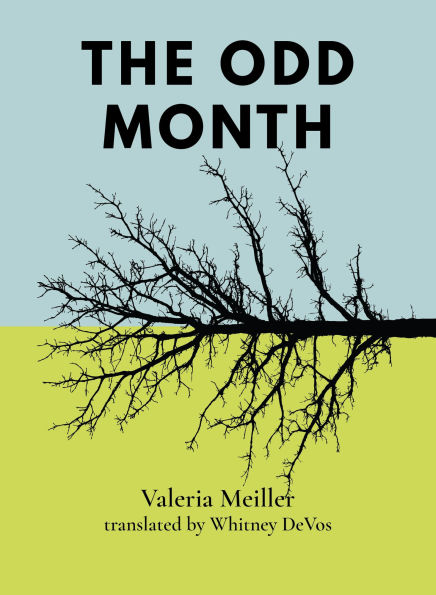
 By Valeria Meiller. Black Ocean, 2024
Known colloquially as “the odd month” for its unusual number of days, February in the rural Argentine imaginary has historically represented an auspicious time: the only month without rain, in which that season’s crops are gathered, celebrated, tallied, and accounted for. Drawing on this idea, The Odd Month charts a dystopian, lyrical landscape at the intersection of the twentieth-century agroindustry in Argentina and the devastating drought in the region from 2008 to 2009.
The poems are informed by the Argentine rural literary tradition while reflecting on the ways a once-idealized landscape has since been transformed. As these ecologically engaged poems show, if on the one hand there is the law—of the family, of religion, of animal domestication, of trickle-down economics, of national identity—attempting to produce order through different systematizations of the natural, on the other is the way in which animal and plant life put these laws into crisis and resist being mastered by humans.
Valeria Meiller is an Argentine poet and scholar. She is the author of several poetry books in Spanish, including El recreo and El libro de los caballitos. Meiller is also an Assistant Professor in Social and Environmental Challenges in Latin America at the University of Texas, San Antonio. She is working on an academic monograph, Necroterritories: Slaughterhouses and the Politics of Death, which explores how cultural materials from the Plata River basin have shaped a regionally specific understanding of slaughtering sites. Meiller is also the director of Ruge el bosque, a project on plurilinguistic environmental poetry from Abiayala/Afro/Latin-America that entails publishing a series of regional anthologies. So far, she has co-edited two anthologies reuniting environmental expressions from the Southern Cone and the Mesoamerican region. Subsequent volumes will focus on poetry from the Caribbean, the Andean States, and the Amazon Basin.


