

ASLE’s Scholar of the Month for June 2026 is Sreya Ann Oommen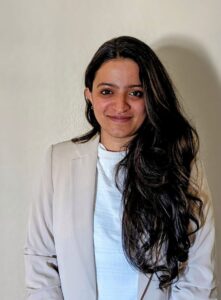
Sreya Ann Oommen is a Postdoctoral Environmental Humanities scholar and coordinator at UNESCO BRIDGES Flagship Hub at Arizona State University’s Global Futures Laboratory. Her interdisciplinary research engages Island Literary Studies, Critical Ocean Studies, Decolonial Studies, Environmental Humanities, and Sustainability Studies. Oommen’s work examines how literary and cultural representations of islands shape understandings of identity, placeness, environmental justice, and socio-ecological futures. Drawing on Anthropocene and future studies frameworks, her research challenges reductive and colonial perceptions of island communities by foregrounding the historical, cultural, and environmental realities and perceived futures of island and coastal societies.
Her current projects also explore futures literacy, energy humanities, and narrative-based approaches to sustainability and social transformation. Through her work with UNESCO BRIDGES, Humanities for the Environment, and Create the Change, she collaborates on interdisciplinary initiatives that integrate the humanities and social sciences into sustainability research, community engagement, and institutional transformation. She also co-leads projects such as “From Sea to Sky: Archipelagic Thinking, Desert/Island Poetics, and Island Systems” and “Storying Just Futures,” which incorporate humanities-based approaches into sustainability policy, public scholarship, and community-centered futures thinking. Oommen has published scholarship on Anglo-Indian Studies, Human Rights Literature, Ecocriticism, and Island Studies, and her work bridges literary analysis, environmental thought, and public-facing humanities research.
How did you become interested in studying ecocriticism and/or the environmental humanities?
I grew up in Kerala in the Southern part of India. Kerala is known as ‘God’s Own Country’, and growing up in the lush green landscape of this coastal state, a global biodiversity hotspot, intersected by Western Ghats mountain ranges, back waters, and sky islands, I inherited a responsibility for ecosystem conservation and sustainable ways of living. The influence of this environment linked with my love for stories made me gravitate towards place based narratives, and a decade ago I decided to study islands and islandness. I believe that this research decision was serendipitous, as my interest in islands opened up the world of environmental humanities before me. After completing my PhD from University of Delhi, India in 2023, I joined as a Postdoctoral Research Scholar at UNESCO BRIDGES Flagship Hub and Humanities for the Environment at Arizona State University under the guidance of Dr. Joni Adamson. I also work as a post doc for Create the Change project under Dr. Sally Kitch’s guidance. The first project that I worked at ASU with Dr. Adamson was “Indigeneity in Oceanic commons: Reclaiming ties from Taiwan to Hawai’i.” My training in Island Studies became important professionally while engaging with Taiwanese and Hawaiian scholarship.
My work at Arizona State University has helped me place myself as an environmental humanist working at the intersection of sustainability and community facing projects. The opportunity to co-teach a Humanities Lab course “Energy, Justice, and Action,” with Dr.Joni Adamson and Dr.Gary Dirks, that addressed the warnings and need for conservation practices that Kim Stanley Robinson raise in The Ministry for the Future, helped me showcase how environmental humanities successfully introduces scientific and economic concepts such as Direct Air Capture and Carbon Coin to the next generation of scholars, while simultaneously encouraging them to revisit and get inspiration from local, traditional, and indigenous practices of conservation that would help them develop a sustainable way of living. My identity as an individual from a coastal place that faces the risk of drastic floods and rising sea levels, along with my love for teaching and the knowledge that stories, oral histories, and narratives are important in world building, keep me deeply motivated and engaged in my chosen field of work: environmental humanities.
Who is your favorite environmental artist, writer, or filmmaker? Or what is your favorite environmental text? Why?
When I think about the texts that have most influenced my work in Environmental Humanities, I return to the novels of the Malayalam author M. Mukundan. As a native Malayalam speaker, I encountered his writings long before I knew that I would one day study Island Studies and Environmental Humanities. Looking back, his novels were important to help me think critically about the relationship between people, places, history, and memory.
Mukundan’s novels Mayyazhippuzhayude Theerangalil (On the Banks of the River Mayyazhi, 1974) and Daivathinte Vikruthikal (God’s Mischief, 1989) unfold the story of Mahé, or Mayyazhi, a town named after the river that flows through it. Geographically, Mahé is surrounded by Kerala but administratively belongs to the Union Territory of Puducherry, and its history is shaped by both British and French colonialism. In Mukundan’s narratives, Mahé as a place becomes the protagonist. The river, the landscape, the memories of colonialism, and the lives of its inhabitants are woven together so seamlessly that the boundaries between human and nonhuman worlds begin to blur. Long before I encountered Environmental Humanities as an academic field, Mukundan’s work taught me to think about place as a living archive of history, memory, and ecological relationships.
Mukundan’s ability to bring places to life is equally evident in Delhigadhakal (Delhi: A Soliloquy, 2011). Although the novel is not typically categorized as environmental literature, reading it while commuting on the Delhi Metro transformed the way I experienced the city. Through his narration of historical events such as the Indo-China War, the Indo-Pak Wars, the Emergency, and the anti-Sikh riots of 1984, I felt connected to layers of Delhi’s history in a way that was different from my own experience of living in the city for four years.
Mukundan’s writing also prepared me to appreciate authors such as Erna Brodber whose novel Nothing’s Mat (2014) explores the relationship between place, memory, and her community in Jamaica. What I admire most about both writers is their ability to make place itself a central character. Their works remind us that environments are never passive backdrops; they are shaped by histories of colonialism, migration, resilience, and belonging. As someone who researches Island Literary Studies and Environmental Humanities, I continue to return to these texts because they have fundamentally shaped how I understand the connections between literature, place, and environmental imagination.
What are you currently working on?
My current work sits at the intersection of Island Literary Studies, Environmental Humanities, Critical Ocean Studies, and Futures Studies. At its core, I am interested in how stories shape the ways we understand islands, communities, environments, and possible futures. Much of my research examines how literary and cultural representations of islands influence ideas of identity, placeness, environmental justice, and socio-ecological change. Drawing on Anthropocene and decolonial frameworks, I explore how narratives from island and coastal communities challenge the tendency to view islands as isolated or peripheral spaces and instead reveal their rich historical, cultural, and environmental significance.
A major focus of my work right now is the relationship between storytelling, futures literacy, and participatory governance. As a co-lead of the “Storying Just Futures” project with Dr. Joni Adamson at Arizona State University’s Global Futures Laboratory, UNESCO BRIDGES Flagship Hub, and Create the Change, I work with students, early-career scholars, and community leaders to explore how storytelling and futures thinking can support more just and equitable responses to social and environmental challenges. What began as a series of workshops on futures literacy, climate imagination, and environmental justice has evolved into a fellowship and community-engaged initiative that helps participants move from imagining alternative futures to developing community-relevant recommendations and action plans. My role involves mentoring fellows, facilitating workshops on futures literacy and storytelling, and supporting collaborative projects that connect humanities-based methods with sustainability, climate justice, and community-centered futures planning.
I am also co-leading “From Sea to Sky: Archipelagic Thinking, Desert/Island Poetics, and Island Systems” with Dr. Jada Ach, Dr. Joni Adamson, and Dr. Serena Ferrando. The project brings together humanists and scientists to examine the cultural, ecological, and historical relationships among islands, deserts, oceans, and the communities connected to them. The project explores how concepts such as archipelagic thinking can open up new ways of understanding ecological relationships, cultural histories, and environmental futures across seemingly distant places. Through this work, I continue to investigate the role of Island Studies within broader conversations in Critical Ocean Studies and the Environmental Humanities.
Alongside these projects, I contribute to the UNESCO BRIDGES global coalition and the Create the Change initiative at Arizona State University, where I collaborate with scholars across disciplines to integrate humanities perspectives into sustainability research and public engagement. Across all of my work, I am interested in how literary and cultural analysis can help bridge scientific knowledge and lived experience. I see the humanities as a vital space for understanding environmental change, imagining alternative futures, and supporting more just and sustainable forms of social and ecological transformation.
What is something you are reading right now (environmental humanities-related or otherwise) that inspires you, either personally or professionally?
One book that has been particularly inspiring to me recently is Ayana Elizabeth Johnson’s What If We Get It Right? (2024). Johnson, a marine biologist, climate advocate, and co-host of the podcast How to Save a Planet, offers a refreshing alternative to the apocalyptic narratives that often dominate discussions about climate change. What I find most compelling about the book is its insistence that we move beyond the familiar question, “What can I do?” and instead ask, “What can we do?” This shift from individual responsibility to collective action resonates deeply with both my research and my current work in futures literacy.
Johnson argues that envisioning environmentally just futures requires imagination, but not the kind of imagination that ignores reality. Rather, she encourages us to develop hopeful and realistic visions of the future that are grounded in existing technologies, community knowledge, and collective action. As someone whose work explores storytelling, futures thinking, and environmental justice, I find her emphasis on imagination as powerful. We are often surrounded by narratives of collapse and catastrophe, but Johnson reminds us that imagining better futures is itself a necessary form of climate action.
One concept from the book that has stayed with me is her Climate Action Venn Diagram. The exercise asks three deceptively simple questions: What are you good at? What work needs doing? What brings you joy or satisfaction? The overlap between these questions becomes a space for meaningful climate action. I appreciate this framework because it recognizes that climate and sustainability work cannot be sustained through obligation alone. It can also be adapted to different scenarios. If we are to remain engaged over the long term, we need to find forms of action that draw on our skills, respond to genuine community needs, and provide a sense of purpose. Johnson’s framework encourages us to think about our networks, resources, and expertise along with the ways in which they contribute to broader collective efforts rather than isolated individual actions.
At a time when climate discourse can feel overwhelming, Johnson’s work reminds me that environmental futures are not predetermined. They emerge from the collective wisdom, creativity, and resilience of communities working together to address shared challenges. For me, that message is both intellectually energizing and personally hopeful.
Is there a scholar in the field who inspires you? Why?
The environmental humanities scholar who has had the greatest influence on me is Dr. Joni Adamson. Meeting her three years ago was a defining moment in both my professional and personal life. Dr. Adamson is a leading light when it comes to mentoring students and early-career scholars, and I have learned a great deal from her. The most important lesson she has taught me is to walk the walk. Talking the talk is not enough. When obstacles arise, she shows us by example how to keep moving forward and, as she often says, to “proceed to the route.” I have had the privilege of being mentored by this trailblazing environmental humanist, who is as kind and generous as she is brilliant.
What I admire most about Dr. Adamson is the way she approaches scholarship and collaboration. Through her work on environmental justice, Indigenous literatures, sustainability sciences, food justice, and the rights of nature, she has helped shape the field of Environmental Humanities. Just as importantly, she has helped create many of the networks and collaborative spaces that support the field today. From 1998 to 2011, she founded and led the Environmental Justice Caucus of the American Studies Association. In 2012, she served as President of ASLE, and she currently serves as President’s Professor of Environmental Humanities in the Department of English and Distinguished Global Futures Scholar at the Julie Ann Wrigley Global Futures Laboratory (GFL). She is also Founding Director of the Flagship Hub of UNESCO BRIDGES Sustainability Coalition, the first humanities-led science platform in the world, and Director of Humanities for the Environment, based in the Global Institute for Sustainability and Innovation. Through her leadership in UNESCO BRIDGES and Humanities for the Environment, she brings together humanists, scientists, policymakers, artists, and community partners to address environmental challenges that no single discipline can solve on its own.
Her mentorship has encouraged me to think beyond traditional disciplinary boundaries and to see storytelling, futures literacy, and community engagement as important parts of environmental humanities scholarship. Watching her build collaborative projects has shown me what engaged scholarship looks like in practice. She has helped me understand that some of the most meaningful work we do happens when we create spaces where people can learn from one another, exchange ideas, and work together toward more just and sustainable futures. I am also continually inspired by the generosity with which she supports students and colleagues. She has an extraordinary ability to create opportunities for others and to connect people across disciplines, institutions, and countries. For these reasons, Dr. Adamson remains one of the scholars I admire most and a model for the kind of scholar, mentor, and community-builder I hope to become.


