

This episode was recorded Friday, October 18, 2024
Co hosts: Sharae Deckard and Kate Huber
FEATURED GUESTS/WORKS:
 Nathaniel Otjen, Mining for the Climate
Mining for the Climate is a podcast series that examines the impacts of domestic critical mineral extraction. The series considers how new and old forms of mining are fueling the energy transition and what the consequences are of a more mining-dependent society on humans, other beings and the climate.
In addition to offering a platform for environmental storytelling and research, Mining for the Climate is a pedagogical project. Undergraduate students learn an array of skills, including how to use audio and video recording equipment, how to interview people and how to produce audio narratives. At the same time, we are working to bring these stories to primary and secondary classrooms where they can further inspire and impact.
Nathaniel Otjen is Assistant Professor of Sustainability and Environmental Studies at Ramapo College. Before this, he was a Postdoctoral Fellow in the High Meadows Environmental Institute at Princeton University. An interdisciplinary environmental humanist, he specializes in multispecies justice theory, energy humanities, and literary and cultural studies. He is currently writing his first book, Entangled Lives: Multispecies Selves, Justice, and Narratives, and co-directing an ongoing project called Mining for the Climate. In addition, he is the co-editor of a forthcoming special issue in the minnesota review on “Multispecies Justice and Narrative.” His published research can be read in Environmental Humanities, Animal Studies Journal, ISLE, and a/b: Auto/Biography Studies, among others.
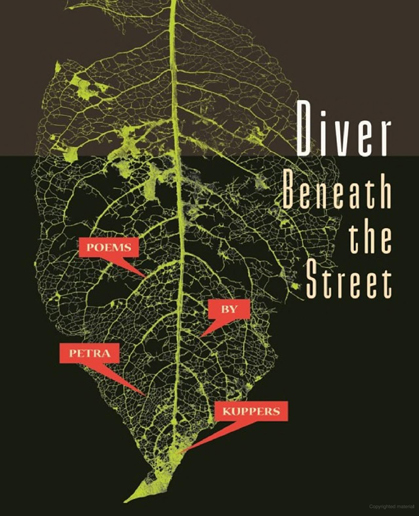 Petra Kuppers, Diver Beneath the Street
True crime meets ecopoetry at the level of the soil, bringing together life and death. A decaying psychogeography unfurls the landscapes of the 1967–69 Michigan Murders, the 2019 Detroit serial killer, and the COVID-19 lockdown in this visceral poetry collection. Author, performance artist, and disability culture activist Petra Kuppers dissects traces of violence in the richness of the soil while honoring lost community members. Dynamic and somatic poems traverse the realms of urban space, wild rivers, and the hinterlands of suburbia, glimpsing the decay of bodies, houses, carpets, hair, and bones by way of ecopoetry.
Fereshteh Toosi, School of Oil and Water
 School of Oil and Water is a mail-order kit to examine your relations with petroleum through a collection of artist-made objects and activities. This contemplative correspondence school takes the form of an artist book packaged in a box. Our curriculum explores these guiding questions:
- Who is oil and what does oil desire from us?
- Is oil merely a fuel source and material for humans, or could it have other reasons to exist?
- How can we practice relating to petroleum as a vibrant ancestor?
Fereshteh Toosi is an artist and educator whose work involves encounter, exchange, and sensory inquiry. They produce immersive performances, sculptures, films, poetry, games, and interactive experiences.
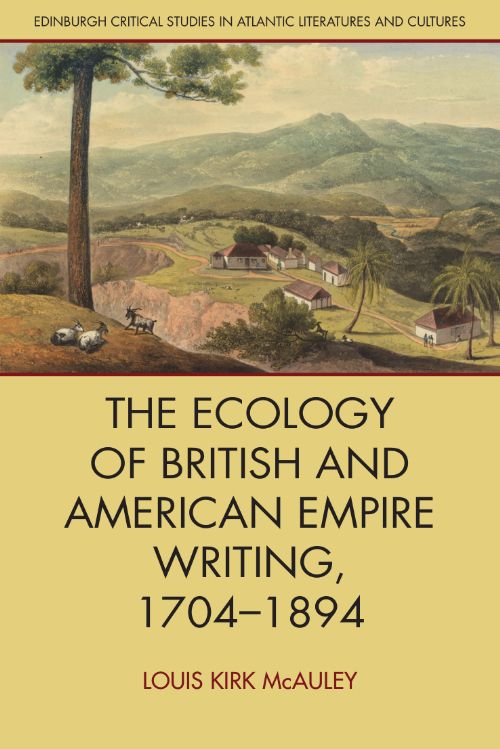 Louis Kirk McAuley, The Ecology of British and American Empire Writing, 1704-1894
This book invites readers to consider the ways in which particular unruly natures, including animals, plants and minerals, actively intervene in literature to decentre the human. Drawing upon invasion biology, it offers transformative ecocritical interpretations of eighteenth- and nineteenth-century British and American literature, highlighting the heterarchical nature of empire building.
Louis Kirk McAuley is a Professor of English at Washington State University, a US-UK Fulbright scholar, and the author of Print Technology in Scotland and America, 1740–1800, and numerous articles.


