

This episode was recorded Friday, January 17, 2025
Co-hosts: John Brannigan and Kyle Keeler
FEATURED GUESTS/WORKS:
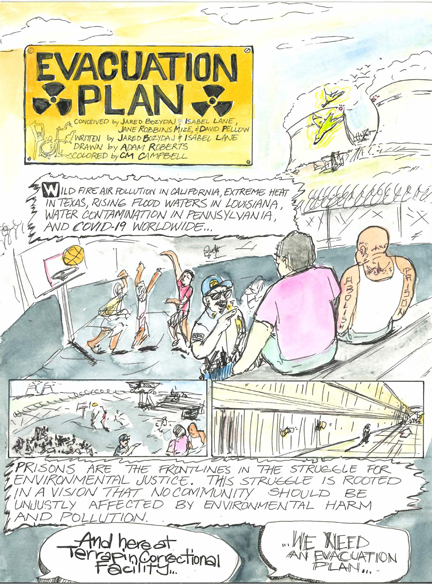 Jane Robbins Mize and Isabel Lane, Evacuation Plan
Evacuation Plan is a research-based graphic narrative (forthcoming from Vera) that follows two incarcerated men looking for answers about a nearby nuclear power plant. Through darkly comic visual storytelling, Evacuation Plan underscores how incarcerated folks are uniquely vulnerable to environmental crises and illuminates an often overlooked experience of environmental injustice.
The project is a collaboration between incarcerated and nonincarcerated scholars, writers, and artists: Jared Bozydaj, Adam Roberts, CM Campbell, David Pellow, Isabel Lane, and Jane Robbins Mize. Isabel Lane, Lecturer in the Harvard College Writing Program, and Jane Robbins Mize, Assistant Professor of Liberal Arts at the School of the Art Institute of Chicago, are submitting this project on the group’s behalf.
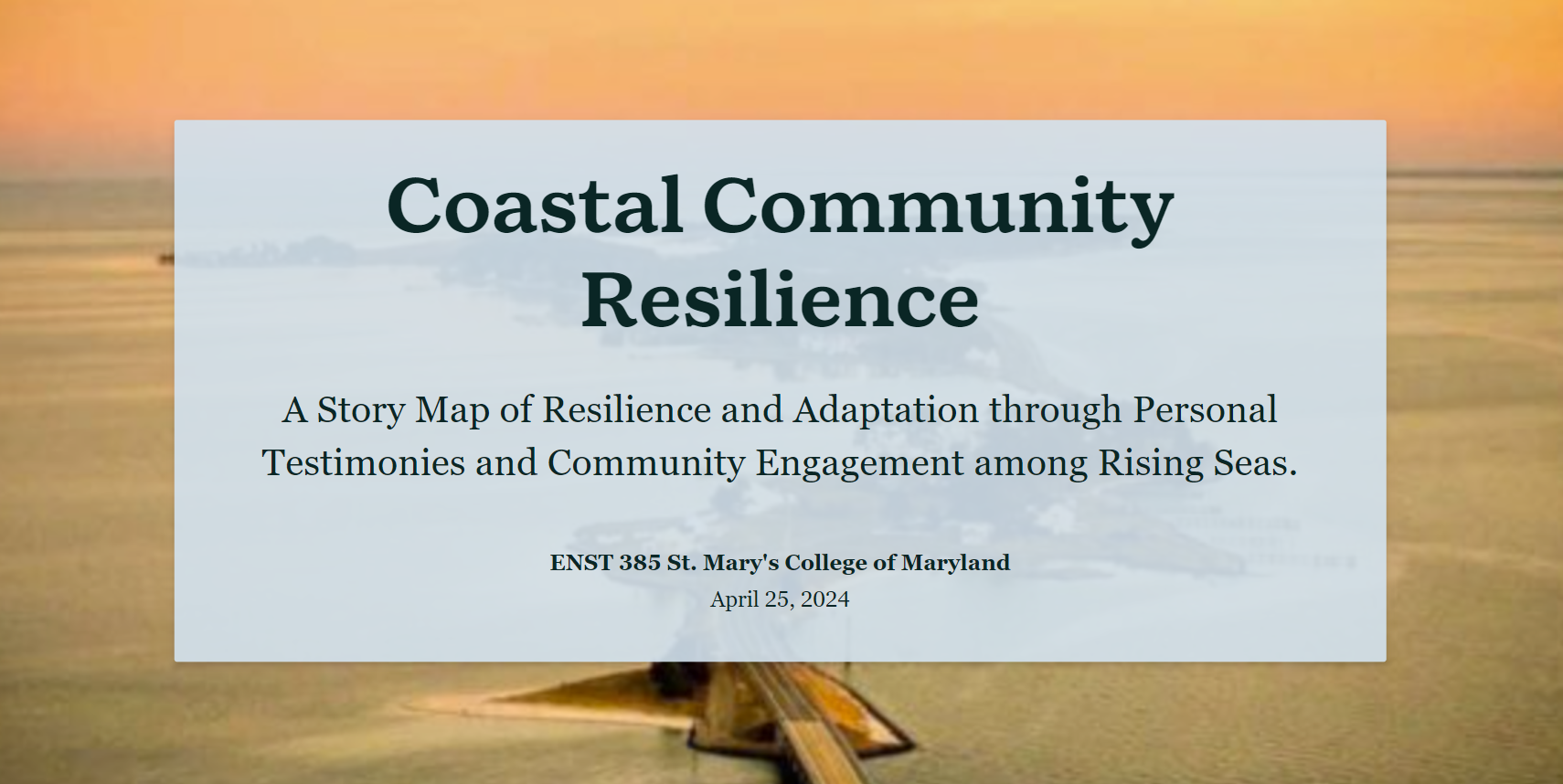 Parisa Rinaldi, Coastal Community Resilience
Students in Rinaldi’s coastal community resilience class conducted community workshops and interviews that were compiled using ArcGIS storymaps. They presented their findings back to community members, along with a song and poem on rising waters featured on the story map. The lyrics and poem were inspired by interviews with coastal residents in Southern Maryland.
 Parisa Nourani Rinaldi is an Assistant Professor of Environmental Studies at St. Mary’s College of Maryland whose work bridges environmental conservation, community resilience, and the arts in addressing climate challenges. Her research explores water science, democracy, and justice in Colombia’s extractive frontiers, as well as the resilience of fisherfolk in Colombia’s Atlantic and Pacific port cities navigating intersecting pressures of urbanization, climate change, and port development. Parisa holds a joint PhD in Development Studies from Universidad de los Andes and The University of British Columbia, and an MS in Geosciences from Georgia State University. During her seven years in Colombia, she taught at major universities, collaborated with artists and activists to create audiovisual narratives, and contributed to participatory action research projects supporting marginalized communities. At St. Mary’s, she integrates these experiences into her teaching and mentorship, fostering partnerships with coastal communities in the Chesapeake Bay and developing digital tools for storytelling and environmental advocacy.
 Leanne Dunic, Wet
A book of prose and photography, Wet follows a transient Chinese American model who thirsts for the unattainable: fair labour rights, the extinguishing of nearby forest fires, breathable air, healthy habitats for animals, human connection. Wet unravels complexities of social stratification, sexual privation, and environmental catastrophe.
 Leanne Dunic is a Canadian multidisciplinary artist and author of transmedia projects such as To Love the Coming End, The Gift, and One and Half of You. Her most recent work is a lyric novel with photographs entitled Wet. She is the leader of the band The Deep Cove, the fiction editor at Tahoma Literary Review, and a teacher at Simon Fraser University’s The Writer’s Studio. Leanne is currently a PhD candidate at Royal Melbourne Institute of Technology and The University of the Fraser Valley’s 2025 Writer-in-Residence.
Kamala Platt, Environmental Justice Poetics
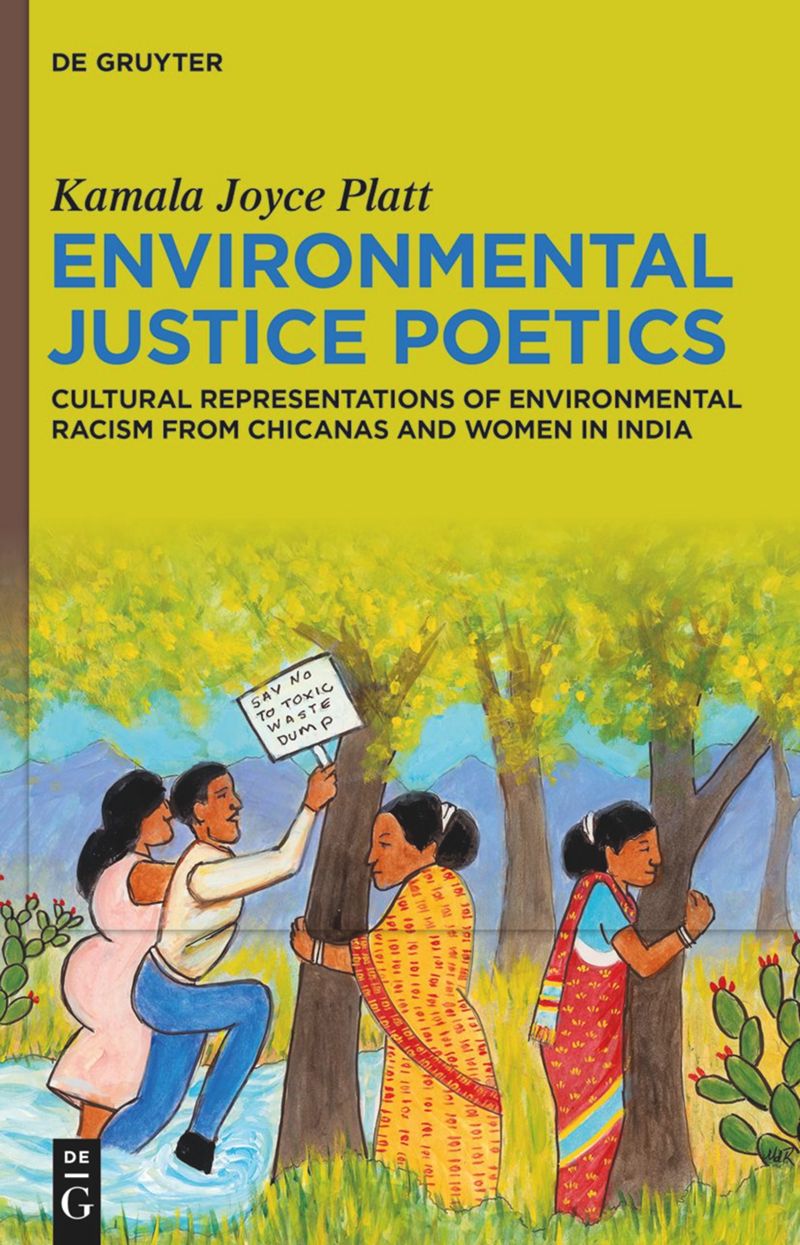 Environmental Justice Poetics is an interdisciplinary, comparative investigation of late 20th Century activist, artistic, literary, and academic discourse—expressive work promoting ecological justice, ending racism, and representing self and community through virtual realism—a cultural poetics of environmental justice. examines ecojustice in conjunction with social movement theories and expressive discourse.
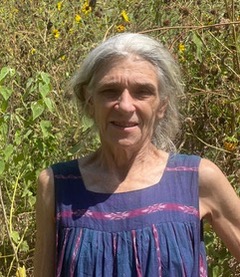 Kamala Platt‘s poetry collections — Gravity Prevails (FlowerSong Press, 2022) Weedslovers: Ten Years in the Shadow of September (Finishing Line Press, 2014), On the Line (Wings Press, 2010), — document and exemplify a poetics of crisis, resistance, and resilience by chronicling manmade calamities and the persistence of hopeful acts in marginalized places. Dr. Platt teaches Creative Writing, Pen Project Prison Writing Internships, Environmental Justice Poetics and Chicana Poetry online for the School of Humanities, Arts and Cultural Studies in Arizona State University’s New College. She tends native landscape, orchard and garden experiments in her yard and Garden of Good Trouble. A Black Mouth Cur named Bonnie Bo, several cats and chickens and a Mini Nubian named Perlita have been her main companions during the pandemic in her neighborhood on San Antonio’s Westside. She continues interdisciplinary art projects, ecojustice scholarship, and Arte Verde experiments, innovating sustainability with Rascuache processes. She serves her communities in conjunction with several nonprofit organizations for environmental-, climate-, and social justice. She keeps in touch with the Meadowlark Center and family in Kansas— zoom facilitates continued learning, poetry readings, and maintaining friendships, making new connections with seed savers, artists and activists.


