

ASLE’s Scholar of the Month for May 2026 is Jepri Ali Saiful
Jepri Ali Saiful is an Assistant Professor in Eco-ELT (Ecological English Language Teaching) and Empirical Ecocriticism at the Department of English Education, Faculty of Education, Communication, and Science, Muhammadiyah University of Surabaya, Indonesia. His research focuses on Eco-ELT, examining how language education (policy, curriculum, instructional approaches and practices, and other education elements) contributes to addressing environmental crises and to the development of language proficiency among language learners. His research also centers on ecolinguistics and empirical ecocriticism, examining how environmental narratives developed within ecocriticism and the environmental humanities more generally shape people’s environmental awareness, attitudes, knowledge, values, worldviews, skills, and behaviors. His works have appeared in reputable journals such as Humanities and Social Sciences Communications (under Nature Journal), TESOL Journal, ELT Journal, and Cambridge Educational Research e-Journal (CERJ), among others. His works also appear in edited volumes published by Springer, Routledge, Bloomsbury, Edinburgh University Press, and others. Lastly, he is a pioneer of Eco-ELT. He coined the term, developed the concept and framework, and set up and became president of the Eco-ELT global community on Facebook, with more than 600 members worldwide, including English educators, environmentalists, ecolinguists, and artists interested in language education and environmentalism. He is an active member of international affiliated TESOL, ecocriticism, and environmental humanities associations, including TESOL International Association, ASLE, ASLE ASEAN, and Empirical Ecocriticism. Some of his signature works on Eco-ELT include ““Feeling Closer to Nature” through Ecocritical ELT” (published in ELT Journal, Oxford University Press, University of Oxford), “Eco-ELT for writing descriptive texts about animals and plants: Fostering writing skill and nature empathy” (published in TESOL Journal), and “Eco-ELT for environmental sustainability: Ecocritical academic writing for cultivating ethical relational value to nature” (published by CERJ, Faculty of Education, University of Cambridge).
How did you become interested in studying ecocriticism and/or the environmental humanities?
My interest in ecocriticism and the environmental humanities began during my undergraduate studies in English education, particularly through literary criticism courses, where I first encountered ecocriticism as a critical lens for examining the relationship between literature and the natural world. Encountering this perspective immediately resonated with me because it offered a way to connect language, literature, and urgent environmental concerns. This initial exposure led me to read more works by ecocritical scholars, attend workshops and conferences, and actively explore how literary, linguistic studies, and language education could contribute to environmental awareness and action. My interest deepened further during my doctoral studies, when I took a minor specialization course, Ecocriticism and American Nature Writing, which expanded my understanding of ecological thought in literary studies. At the same time, reading widely in the environmental humanities made me realize how naturally this field aligns with my academic vision, as it creates space for interdisciplinary conversations in which language and education can play transformative roles in addressing environmental crises.
My scholarly engagement with ecocriticism also grew out of a practical concern. In 2014, I became increasingly troubled by my students’ littering behaviors and began asking how education could cultivate ecological awareness in both critical and enjoyable ways. This reflection inspired me to explore environmental literary works, poetry, folklore, songs, drama, and short films, as media for English learning and ecocritical discussion. From this, I coined and developed the concept of Eco-ELT (Ecological English Language Teaching), which examines the relationship between English language education and the natural environment. Grounded in social constructivism, ecocriticism, and ecopedagogy, Eco-ELT integrates ecological principles into curriculum design, learning materials, classroom activities, assessment, educational policy, and other education ecosystems.
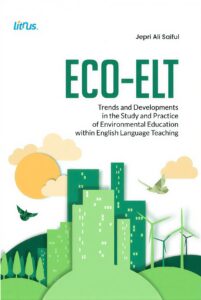
This work culminated in my book, Eco-ELT: Trends and Developments in the Study and Practice of Environmental Education within English Language Teaching (2024), which documents 116 environmental initiatives across 37 countries. Earlier, in 2023, my doctoral dissertation on Islamecocriticism and Eco-ELT examined environmental narratives, news texts, poetry, and Islamic ecological references that foster students’ nature connectedness and English language development. Through these experiences, ecocriticism has become both my intellectual home and my way of contributing to environmental justice through language education.
Who is your favorite environmental artist, writer, or filmmaker? Or what is your favorite environmental text? Why?
One environmental writer I really connect with is John Charles Ryan. I have always loved plants since childhood, and that is why his work resonates so much with me. I have learned a lot from his scholarship. I have come to see plants not merely as passive elements of the environment, but as living beings with forms of intelligence, memory, and relational presence. His work broadens my understanding of plant life, including the idea that trees and other plants participate in complex ecological and cultural systems.
What I also find particularly compelling about John Charles Ryan is his ability to bridge environmental humanities, plant studies, and literary analysis. His writings invite readers to listen to plants more attentively and to rethink human-centered perspectives. For example, his works such as Old Trees Hold Memory: Aboriginal Australian Perspectives on Memory, Trauma, and Witnessing in the Arboreal World, Cultivating Botanical Wisdom: Durian Narratives and the Plant Posthumanities, On Being Called by Plants: Phytopoetics and the Phytosphere, and Tracing the Digital Plant Humanities: Narratives of Botanical Life and Human–Flora Relations have significantly shaped how I conceptualize the relationship between humans and the more-than-human world.
I also had the opportunity to join one of his workshops on plant studies, which was a transformative experience for me. It inspired me to design Eco-ELT activities that focus on plants, such as nature writing in English and ecocritical discussions centered on local flora. Through these activities, I observed that students not only improved their language skills but also developed a stronger sense of empathy and connection to nature.
What are you currently working on?
I am currently engaged in three research projects and one edited book. The first investigates gender and ableism issues in K-12 Indonesian English textbooks, employing the ecolinguistics and ecofeminism framework for the textbook analysis. My team and I secured a grant for this project and are currently writing up the results for publication. The second project explores drama as a medium for climate justice. My co-researcher and I conducted an intervention using drama to promote climate justice among youths in a rural region of Indonesia affected by climate change and environmental challenges such as illegal logging. We are in the process of documenting our findings. The third research focus involves examining the intersection of AI, Posthumanism, and ecological worldviews. Specifically, I am investigating whether ecocritical discussions with AI about environmental crises can influence students’ ecological perspectives. I am also working on my edited book on environmentalism in language education, with a particular focus on Global South perspectives or works. Lastly, I am open to future collaborations within my areas of expertise, including Eco-ELT, empirical ecocriticism, ecolinguistics, and the broader field of environmental humanities.
What is something you are reading right now (environmental humanities-related or otherwise) that inspires you, either personally or professionally?
I am currently reading Blue Humanities: Storied Waterscapes in the Anthropocene (2023) by Serpil Oppermann. My interest in the book comes from a growing concern about rivers and oceans, especially the rising problem of microplastic pollution. This concern grew after I attended an exhibition and seminar on microplastics, where I realized that public awareness and understanding of the issue are still quite limited. As a result, I am working on a project about river justice and microplastics for an English for Sustainability course that involves over 1,000 first-year undergraduates at my university.
Given this context, I was looking for a scholarly work that could enhance my understanding of water issues from both conceptual and pedagogical perspectives. I found that Oppermann’s book offers a compelling and relevant framework. One key insight I have gained is that our perceptions of water bodies are not neutral; they are culturally and discursively shaped. This means that fostering environmental responsibility involves not just providing information but also changing how people think about and relate to rivers and oceans.
The book provides deep analyses of human relationships with aquatic environments, combining material-discursive and sociocultural perspectives. It also offers critical frameworks for understanding waterscapes in the Anthropocene. With these insights, I feel better equipped to create teaching activities and river-based projects that encourage students to rethink their connections with rivers. My goal is to help them develop more critical, reflective, and ecologically responsible ways of engaging with water environments.
Is there a scholar in the field who inspires you? Why?
Choosing only one scholar is difficult, but two have greatly shaped my intellectual journey: Scott Slovic and John Charles Ryan. Both have made substantial contributions to ecocriticism and the environmental humanities, and their work continues to shape my research and teaching. From Slovic, I have learned the importance of viewing literature as a powerful tool for raising environmental awareness and fostering ethical reflection. His expertise in ecocriticism, especially in American nature writing and environmental literature, underscores how stories can shape human perceptions of nature and promote ecological responsibility. He also emphasizes the importance of personal engagement and experiential learning in environmental writing, which has shaped my approach to integrating reflective and critical discussions in Eco-ELT classrooms. Moreover, his work shows that ecocriticism can be accessible and relevant to society, connecting academic inquiry with real-world environmental issues. Besides, from John Charles Ryan, I have learned about interdisciplinary methods in environmental humanities, focusing on his research on plant studies, multispecies relations, and ecological imagination. His scholarship highlights nonhuman agency and the ethical aspects of human–nature interactions. This has shaped my view on how language and literature can depict more-than-human worlds and promote ecological awareness among students. Also, his work has motivated me to investigate various cultural and ecological contexts, underscoring the value of including local environmental knowledge in global academic discussions.


